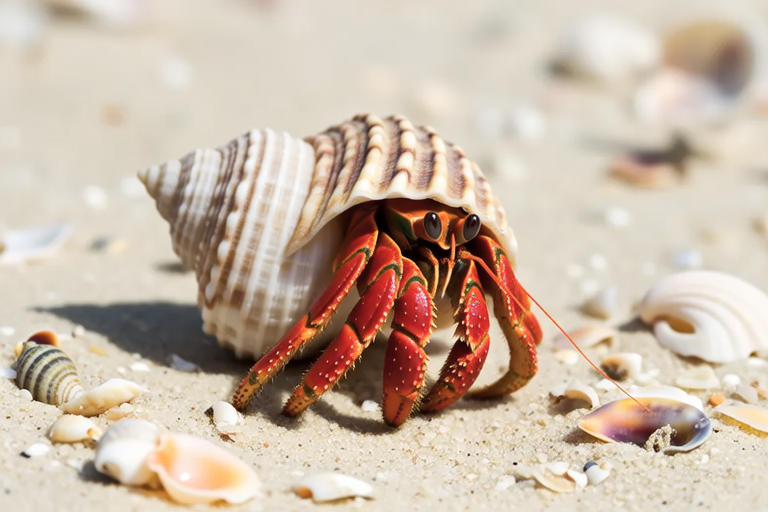
Hermit Crabs: Masters of Minimalism and Sustainability
Hermit crabs are fascinating creatures that have mastered the art of making homes from discarded shells. This practice not only illustrates principles of minimalism and sustainability but also provides valuable lessons for humans in reducing waste, repurposing resources, and living sustainably.
The Resourcefulness of Hermit Crabs
Hermit crabs are incredibly resourceful, utilizing discarded mollusk shells as their primary shelter. These shells provide protection from predators and harsh environmental conditions. As hermit crabs grow, they must find larger shells to accommodate their expanding bodies. This necessity drives them to constantly seek out new homes, a process that reflects their adaptability and resilience.
Environmental Adaptability
Hermit crabs are highly adaptable to their environment, thriving in diverse habitats such as coral reefs, rocky shores, and sandy beaches. Their ability to survive in various ecosystems is a testament to their flexibility and ingenuity. This adaptability is crucial for their survival, as it allows them to find suitable shelters even in challenging conditions.
The Transient Nature of Their Housing Choices
The housing choices of hermit crabs are transient, reflecting their nomadic lifestyle. They move from one shell to another as needed, ensuring they always have a safe and comfortable home. This transient nature emphasizes the importance of being flexible and adaptable in our own lives, recognizing that change can be an opportunity for growth and improvement.
Scientific Facts About Hermit Crabs’ Lifecycle and Behavior
Hermit crabs undergo several stages during their lifecycle, starting from eggs to larvae and finally becoming adults. As they mature, they shed their exoskeletons multiple times, growing larger with each molt. The search for new shells begins after each molt, as the old shell no longer fits their growing bodies. This process highlights the importance of continuous adaptation and resourcefulness in their lives.
Lessons From Hermit Crabs for Human Lifestyle and Environmental Conservation
Reducing Waste
One of the most significant lessons we can learn from hermit crabs is the importance of reducing waste. By reusing discarded shells, hermit crabs minimize the need for creating new homes, thus conserving resources. Humans can apply this principle by reducing, reusing, and recycling materials in our daily lives. For example, instead of purchasing new products, we can repurpose items we already own or buy second-hand goods. This approach not only saves money but also reduces the demand for new resources, contributing to environmental conservation.
Repurposing Resources
Hermit crabs demonstrate the value of repurposing resources by turning discarded shells into functional homes. This practice encourages us to think creatively about how we can reuse everyday objects. In our homes, we can repurpose items like glass jars, cardboard boxes, and plastic containers for storage or organization. By doing so, we extend the life of these items, reducing the amount of waste sent to landfills and promoting a more sustainable lifestyle.
Living Sustainably
The sustainable lifestyle of hermit crabs serves as an inspiration for humans to adopt eco-friendly practices. By minimizing waste, repurposing resources, and adapting to changing circumstances, we can contribute to the preservation of our planet. Simple actions such as using reusable shopping bags, reducing water consumption, and supporting local businesses can have a significant impact on the environment. Additionally, incorporating green spaces into urban areas and promoting biodiversity can help create healthier ecosystems for all living beings.
Practical Applications of Hermit Crab Insights
Minimalist Living
The minimalist lifestyle advocated by hermit crabs emphasizes the importance of owning fewer possessions and focusing on what truly matters. By adopting a minimalist mindset, individuals can reduce clutter, simplify their lives, and focus on meaningful experiences rather than materialistic pursuits. This approach not only promotes personal well-being but also contributes to environmental conservation by reducing the demand for new products and minimizing waste.
Community Building
Hermit crabs often live in close proximity to one another, forming communities within their shared habitats. This social structure highlights the importance of community building and collaboration among humans. By working together, we can achieve common goals, share resources, and support one another in our pursuit of sustainable living. Community gardens, recycling programs, and environmental awareness campaigns are excellent examples of collaborative efforts that benefit both individuals and the environment.
Educational Opportunities
The unique habits of hermit crabs offer numerous educational opportunities for children and adults alike. Learning about these fascinating creatures can inspire curiosity, foster a sense of wonder, and promote environmental stewardship. Schools and community organizations can incorporate hermit crab-themed activities into their curricula, encouraging participants to explore topics such as biology, ecology, and sustainability. These experiences can instill a lifelong appreciation for nature and motivate individuals to take action in protecting our planet.
Conclusion
Hermit crabs are true masters of minimalism and sustainability, offering valuable lessons for humans in reducing waste, repurposing resources, and living sustainably. By observing their resourcefulness, environmental adaptability, and transient housing choices, we can gain insights into how to lead more eco-friendly lifestyles. Incorporating these principles into our daily lives can contribute to environmental conservation efforts and create a healthier planet for future generations.
