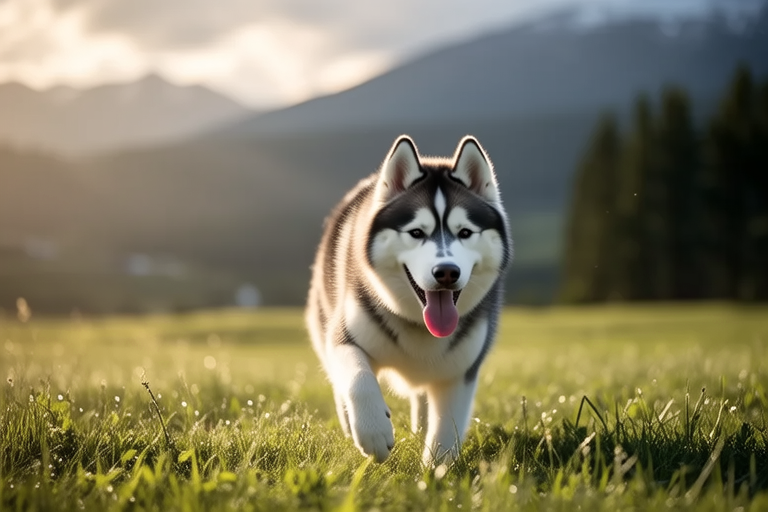
Chasing Dreams: Adventures with My Siberian Husky
There is something magical about the bond between a human and their dog, especially when that dog is a Siberian Husky. These magnificent creatures possess an energy and spirit that can inspire even the most reluctant adventurer. Over the years, my Siberian Husky, Luna, has been more than just a pet; she’s been a partner in countless adventures, a teacher of life’s lessons, and a constant source of joy and companionship.
The First Encounter
The moment I first laid eyes on Luna, I knew she was different. Her striking blue eyes and thick, luxurious coat were captivating. But it was her lively demeanor and mischievous smile that truly caught my heart. She had an undeniable presence, and from that day forward, I was hooked. The decision to bring her home was easy; she was destined to be my companion on all future adventures.
Exploring Nature Together
One of the greatest joys of having a Siberian Husky as a companion is the ability to explore the great outdoors together. Whether it’s hiking through dense forests, trekking up rugged mountains, or simply wandering along serene lakeshores, Luna always seems to be at her happiest when we’re out in nature.
Our first major adventure took us to the remote wilderness of Alaska. The vast, untamed landscapes stretched out before us, and Luna seemed to thrive in this environment. Her natural instincts kicked in as we ventured deeper into the forest. She would run ahead, her paws barely touching the ground as she explored every nook and cranny. The sound of her paws crunching on fallen leaves and the occasional rustle of bushes provided a soundtrack to our journey.
As we hiked higher, the air grew cooler, and the trees became sparser. The landscape transformed into a sea of wildflowers, their vibrant colors painting the earth in hues of purple, yellow, and red. Luna would stop occasionally to sniff at the flowers, her nose twitching with curiosity. She seemed to understand that this was a special place, one where we could both find peace and tranquility.
The summit of the mountain offered breathtaking views of the surrounding valleys and distant peaks. As we stood there, gazing out over the horizon, I felt a deep sense of connection with Luna. It was as if we were part of something larger, something eternal. In that moment, I realized that our bond went beyond mere companionship; it was a shared understanding of the world around us.
Challenges Faced
While our adventures have been filled with joy and wonder, they haven’t been without their challenges. One of the biggest hurdles we’ve faced is the harsh winter weather. Siberian Huskies are well-suited for cold climates, but even they have their limits. During particularly brutal snowstorms, Luna would struggle to keep warm, and I had to ensure she stayed hydrated and fed.
Another challenge has been training her to behave properly in public spaces. While Luna is generally well-behaved, her natural instincts sometimes get the better of her. She has a tendency to chase after small animals, which can be problematic in urban areas. To address this, I’ve enrolled her in obedience classes and worked tirelessly on her recall commands. It hasn’t always been easy, but the progress we’ve made has been rewarding.
The Unbreakable Bond
Despite the challenges, the bond between Luna and me has only grown stronger over time. There’s a certain unspoken communication between us that transcends words. When I call her name, she responds with a wag of her tail and a look of pure adoration. It’s in those moments that I feel the deepest connection with her.
This bond has taught me valuable lessons about patience, trust, and loyalty. Luna has shown me that true friendship is built on mutual respect and understanding. She has also taught me the importance of perseverance. Whether we’re facing a difficult hike or simply navigating through a busy city, Luna never gives up. She keeps pushing forward, and in doing so, she inspires me to do the same.
Lessons Learned
Through our adventures, I’ve learned that life is full of unexpected twists and turns. Just when you think you’ve got everything figured out, something new comes along to challenge you. This has been especially true during our travels. We’ve encountered everything from sudden storms to treacherous terrain, and each experience has taught me something new about myself and the world around me.
One of the most important lessons I’ve learned is the value of slowing down and appreciating the little things. In our fast-paced world, it’s easy to overlook the beauty that surrounds us. But Luna has a way of reminding me to pause and take in the sights, sounds, and smells of nature. Whether it’s the gentle rustling of leaves in the wind or the soft patter of raindrops on the ground, there’s always something worth noticing.
Final Reflections
Looking back on our adventures together, I realize how lucky I am to have Luna by my side. She has enriched my life in ways I never could have imagined. Through her, I’ve discovered new places, met new people, and gained a deeper appreciation for the world around me. Our bond is a testament to the power of love and companionship, and I’m grateful for every moment we’ve shared.
As we continue on our journey together, I know that there will be more challenges, more adventures, and more lessons to learn. But I also know that no matter what lies ahead, Luna will be there beside me, ready to face whatever comes our way. And for that, I am eternally grateful.
